• Skip to primary navigation
  • Skip to main content
  • Skip to footer
American Idea Foundation

American Idea Foundation

Measuring Results, Expanding Opportunity, Improving Lives.

  • Contribute
  • About
    • Paul Ryan
    • Our Team
  • Mission
    • 2025 Progress Report
  • Approach
  • News
    • Blog
    • Press
  • Contact

Blog

CarePortal: Harnessing technology and civil society to help America’s at-risk youth

August 18, 2025 by Mike

By: AIF Staff

American Idea Foundation President Paul Ryan has long believed that America is at her best when civil society, which he often defines as the space between citizens and their government, is strong. Rather than simply waiting on government to help fellow citizens in times of need, Americans have always prided themselves on assisting their neighbors and community members who are struggling, often utilizing churches, philanthropic, or civic groups to organize these efforts.

This community-driven approach to solving some of America’s social challenges is what animates the work being done by CarePortal, one of the organizations that the American Idea Foundation will be supporting in 2025 with financial assistance and technical expertise.

CarePortal is an online hub, a digital platform, and a networking community that links caseworkers, social service agencies, churches, local philanthropists, and aid organizations with individual families and children in times of crisis.

CarePortal predominately serves those involved in the child welfare system or those who are at risk of entering the child welfare system due to preventable causes like poverty and neglect. The organization’s mission is to keep families together, keep children healthy and happy, and harness the power of technology and networking to create a community of caregivers that those in-need can turn to during trying times.

Each service provided or request met via CarePortal is designed to prevent children from entering foster care, to strengthen their families, to improve their educational or health outcomes, and to do so before a breakdown occurs.

Here’s a quick example of how CarePortal works:

  • A social worker or caseworker identifies a specific need for a child, ideally before they enter the foster care system, and enters a request for assistance via the CarePortal platform or app.
  • This request for assistance is then shared with local churches, businesses, non-profits, and individuals, giving them a real-time opportunity to immediately respond and help those in their community.
    • These requests can be for financial assistance on rent, transportation, food, clothing, or any type of support related to a child’s well-being and safety.
  • These requests are met by these civic or faith-based organizations and ideally, a family is strengthened, or a child is helped in a way that prevents them from going into the foster care system.

This video drives home further how CarePortal works with individuals and organizations to help local families and children in need.

CarePortal’s growth is driven by individuals and communities’ desire to support their neighbors in-need. The Wall Street Journal’s Andy Kessler described CarePortal as “The Uber of Foster Care,” and explained the organization’s maturation in this way: 

“The origin story: Healthcare executive Adrien Lewis and his wife began fostering children in 2011 and spent two years trying to get churches in the Kansas City area to recruit foster parents—no easy task. Then, “out of nowhere,” Mr. Lewis says, “I get a vision for CarePortal, to leverage technology to connect. In crisis, those touched by the child-welfare system could connect with churches and people who care in proximity that would want to help if they knew. What would happen if you could expose people to the reality that a bed or crib or car seat, or paying a bill, things that were small, like 6-inch barriers, would actually make a difference to keep kids out of foster care and reunify biological families?” Heck of a vision.

So “with shoestring and duct tape, we pulled together different software platforms and kind of jimmied them together. A pilot of CarePortal hit the market in Austin, Texas, in late 2014. People went nuts over it. The very first request was for a family with a bedbug problem who was trying to adopt a cousin who had been in foster care. Supplies and volunteers solved their bedding problem.”

From those earnest beginnings, CarePortal has developed a network of 1,000 agencies and 6,000 local church and aid response teams across 37 different states that serve a projected 140,000 children and families annually.

In the same Wall Street Journal piece, CarePortal CEO Joe Knittig summed up the group’s work succinctly:

“Uber is to ride-sharing what CarePortal is to care sharing—community-based care sharing. Every day, we have 350 children that are actually being served by their neighbors through CarePortal.” The plan is to scale it to thousands.

Mr. Knittig explains, “CarePortal at its essence is a request-response loop.” On one side are social-service professionals, social workers and others who enter “real-time vetted needs of kids and families in crisis” into the CarePortal app. On the other side are local churches and community responders who see the need and jump into action. “Bedding is the No. 1 need entered into CarePortal. But there could be relational things like ‘I need a mentor.’”

Today, there are over 400,000 children in the U.S. foster care system. The United States spends $30 billion on foster care annually, yet research increasingly shows that preventing foster care is more cost effective and yields better outcomes for both children and families. CarePortal leans into this idea by providing a proactive, connected system of local support for families and children facing immediate crisis.

By combining modern technology with local civic, philanthropic, and faith-based organizations’ desire to help society’s most vulnerable children, CarePortal has hit on an innovative and impactful strategy to keep families intact. The American Idea Foundation is proud to support their efforts to strengthen civil society and assist our neighbors in times of crisis.

To learn more about the American Idea Foundation’s 2025 grant recipients, click here. 

Filed Under: Blog, Press Release

Do the Math: Benefits of Saga Education’s math tutoring add up

August 11, 2025 by Mike

By: AIF Staff

Started in 2014, Saga Education is a high-dosage math tutoring program for students in grade 9 delivered by a combination of in-person tutors and technology-enabled support systems. Saga Education uses high-impact, in-person and online tutoring to transform public education outcomes for diverse student populations.

Saga Education focuses on math for a specific reason, because Algebra 1 is a pivotal gateway subject to high school graduation and long-term economic mobility.

According to the American Institutes for Research, 85% of students who pass Algebra 1 in 9th grade graduate within four years, compared to only 21% of those who never pass. The ability to pass Algebra 1 is an acute problem for Hispanic, African American, and lower-income students.

Saga Education directly addresses this issue by delivering in-school-day tutoring that leverages the power of human capital and modern technology to support students facing external challenges, like income disparities and racial barriers.

Saga Education works with school districts around the country to implement their tutoring curriculum into the regular school schedule. Saga Education tutors work in small groups, 1 tutor to 2-3 students, and they hold sessions 3 times per week for 30-50 minutes per day. The tutoring received is a dedicated, credit-bearing course embedded with students’ daily class schedules and delivered in addition to their core math classes. The Saga Education teachers, most of whom are recent college graduates being provided an annual stipend, stay with students throughout their educational journey and combine academic instruction, mentoring, and strong school-to-home relationships.

This evidence-based curriculum and model has been the subject of multiple Randomized Controlled Trials (RCTs) and is currently being deployed in several Chicago-area schools.

As part of their Chicago High-Impact Tutoring Program, Saga Education delivers its academic support program to students entering Algebra 1 at 16 different Chicago Public High Schools. Each Chicago Public High School selects a modality and a program model (in-person, live-online, or a hybrid) and then, a cohort of 53 tutors, who are trained in a specific 2-week program, provide consistent, structured support to small groups of students throughout the academic year.

Saga Education has already completed two rigorous, large-scale Randomized Controlled Trials (RCTs) evaluating the impact of its math tutoring model for low-income 9th and 10th grade students in Chicago. Among the outcomes, researchers found:

– Improved math achievement at the end of the tutoring year.

– Persistent effects one to two years later.

– Improved academic performance: Tutored students saw an average increase of 0.25 points in math GPA in 11th grade.

A similar Saga Education program in New Mexico produced equally promising findings following a RCT in 2024.

According to Saga Education, when looking more holistically at their impact, the effect of the tutoring program was:

– Students learned up to 2.5 years’ worth of math in one academic year.

– Math course failures were reduced by as much as 63% and course failures in non-tutored subjects were reduced by as much as 26%.

– Student attendance improves by as much as 18 days per academic year.

Each of the RCTs found “that the program produced sizable, statistically significant effects on student math scores on the district tests at the end of the tutoring year.” They also found that the positive effect of the program persists over time.

As University of Chicago researchers summarized when analyzing Saga Education’s approach:

“It is possible to substantially improve academic skills by accounting for the challenges of individualizing instruction—among other things— and that these strategies can be effective even when implemented in traditional public high schools to broad, representative samples of students. These strategies seem to work even with  secondary school students, yielding  benefit-cost ratios comparable to promising early childhood programs. Evidently adolescence is not too late to realize large social benefits from human capital investment.”

Without question, Saga Education has produced promising initial results in helping students cross a critical educational threshold and pass Algebra 1.

The American Idea Foundation is proud to partner with the organization as they continue scaling and evaluating their high-impact tutoring program in the Chicagoland area. Our hope is by utilizing Saga Education’s methods and their trained tutors, more younger Americans will develop the math skills to propel them forward in life.

To learn more about the American Idea Foundation’s 2025 grant recipients, click here. 
Filed Under: Blog, In The News

Bringing Triple P’s Positive Parenting Program to Wisconsin communities

August 11, 2025 by Mike

By: AIF Staff

Former Speaker of the House and American Idea Foundation President Paul Ryan has long-believed that federal efforts like the Maternal Infant and Early Childhood Home Visitation (MIECHV) program provide a successful template to help break the cycle of multi-generational poverty. MIECHV is a hands-on, customizable, evidence-based intervention that improves the quality of life of a newborn child, their parent, and as a result, their broader community.

The effectiveness of MIECHV demonstrates that interventions early in a child’s life, particularly those aimed at helping multiple generations – specifically, parents and children – can make a profound impact, particularly if they are data-driven.

The potential power of programs designed to help both parents and their young children is why the American Idea Foundation will be working with the Running Rebels Community Organization in Milwaukee, WI to bring the universally-acclaimed Triple P Parenting Program, to Southeastern Wisconsin in 2025.

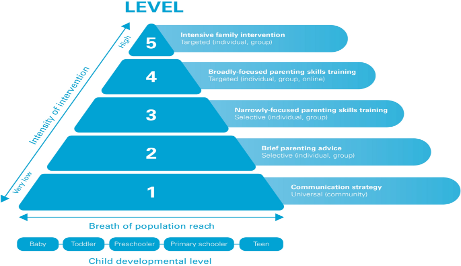
Triple P, which stands the “Positive Parenting Program,” is a system of community-level education and training programs for parents of children ages 0 through 16. The program focuses on delivering customized-tools for parents to utilize during the major developmental periods of a child’s life: infant, toddler, pre-school, elementary school, and as a teenager.

Triple P gives parents the skills to ensure a safe environment for their kids, to foster a positive learning atmosphere, to develop an understanding of assertive discipline, to set realistic expectations, and to care for themselves and their children.  The core services provided by Triple P include cognitive behavioral therapy; community mobilization; conflict resolution; counselling and social work; family therapy; parent training; skills training; and social emotional learning.

Just as the program is tailored to specific development periods of a child’s life, the Triple P system is also comprised of specific “levels,” which are bundles of services provided to families and communities based on need, including risk levels for child maltreatment. The more in-need, the more support that is provided through the Triple P programming.

The end goal of Triple P’s program is to help parents raise happy kids, to have routines that allow for their whole family’s success, to teach conflict-resolution skills, and to allow parents to reach a level of confidence and self-sufficiency when it comes to raising children.

The Triple P program is one of the earliest parenting interventions, started by an Australian doctor in the 1970’s, and it has been since implemented across the globe. Because of its long history and global reach, Triple P has a more extensive evidence base than any other parenting program in the world.

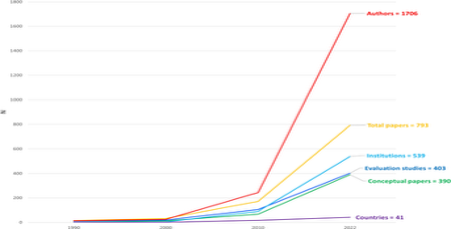
Triple P is an ideal example of how these successful programs can be founded on a basis of evidence, can maintain fidelity to data during the scaling and replication process, and can incorporate findings from its evidence base to better assist parents and families. Consider the growth of research into Triple P programs over time.

As the authors of a evaluation on the development and dissemination of Triple P said:

“Four decades of experimental clinical research have demonstrated that structured parenting programs based on social learning  models are among the most efficacious and cost-effective interventions available to promote the mental health and well-being of children, particularly children at risk of child maltreatment and developing social and emotional problems.”

Triple P is exactly that type of program, and the impact of the program has been positive in both communities throughout the U.S. and countries across the globe. As the authors of a comprehensive Triple P Evaluation noted:

“Various components of the Triple P system have been subjected to a series of controlled evaluations, and have consistently shown positive effects on observed and parent-reported child behavior problems, parenting practices, and parents’ adjustment across sites, investigators, family characteristics, cultures, and countries.

The substantial evidence base supporting Triple P to date includes 43 controlled trials addressing efficacy, effectiveness, and dissemination, as well as 22 service-based field evaluations.”

In 2017, these researchers engaged launched the U.S. Triple P System Population Trial, which tested the extent to which countries could implement the Triple P and see a reduction in child malnutrition. As the researchers noted, this 2017 study found that making Triple P universally available to parents in a country led to:

  • 13% fewer hospitalizations from child abuse injuries
  • 21% fewer out-of-home/foster care placements
  • 31% lower incidence of confirmed child abuse cases

This large-scale trial confirmed what other meta-analyses have found: Triple P has a positive effect on children’s behavior and adjustment, with more pronounced effects being seen in the toddler, pre-school, and elementary school periods.

Additionally, Triple P has been found to be cost effective, because better-equipped parents and healthier children result mean fewer engagements with the social safety net system.

Because of the positive impacts seen across the globe, the American Idea Foundation awarded a 2025 grant to the Running Rebels in Milwaukee, Wisconsin so they can bring the Triple P model to local parents and families who are in need.

Speaker Ryan has championed the example set by the Running Rebels’ Victor and Dawn Barnett and believes they can effectively introduce the concepts of the Triple P parenting program to Milwaukee families.

Funds from the American Idea Foundation will be utilized to train a cohort of Milwaukee-area parents with the Triple P model and then to collect evidence and research on the program’s impact. The hope is that not only will this effort contribute to the growing body of data around Triple P’s effectiveness but also assist Wisconsin families and children live happier and healthier lives.

To learn more about the American Idea Foundation’s 2025 grant recipients, click here. 
Filed Under: Blog, In The News

  • « Go to Previous Page
  • Page 1
  • Page 2
  • Page 3
  • Page 4
  • Interim pages omitted …
  • Page 29
  • Go to Next Page »

Footer

  • Facebook
  • Twitter
  • Contribute
  • About
    • Paul Ryan
    • Our Team
  • Mission
    • 2025 Progress Report
  • Approach
  • News
    • Blog
    • Press
  • Contact
Copyright © 2023 American Idea Foundation. Inc. All rights reserved.