• Skip to primary navigation
  • Skip to main content
  • Skip to footer
American Idea Foundation

American Idea Foundation

Measuring Results, Expanding Opportunity, Improving Lives.

  • Contribute
  • About
    • Paul Ryan
    • Our Team
  • Mission
    • 2025 Progress Report
  • Approach
  • News
    • Blog
    • Press
  • Contact

Blog

Bringing Triple P’s Positive Parenting Program to Wisconsin communities

August 11, 2025 by Mike

By: AIF Staff

Former Speaker of the House and American Idea Foundation President Paul Ryan has long-believed that federal efforts like the Maternal Infant and Early Childhood Home Visitation (MIECHV) program provide a successful template to help break the cycle of multi-generational poverty. MIECHV is a hands-on, customizable, evidence-based intervention that improves the quality of life of a newborn child, their parent, and as a result, their broader community.

The effectiveness of MIECHV demonstrates that interventions early in a child’s life, particularly those aimed at helping multiple generations – specifically, parents and children – can make a profound impact, particularly if they are data-driven.

The potential power of programs designed to help both parents and their young children is why the American Idea Foundation will be working with the Running Rebels Community Organization in Milwaukee, WI to bring the universally-acclaimed Triple P Parenting Program, to Southeastern Wisconsin in 2025.

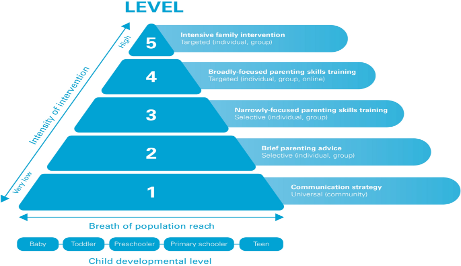
Triple P, which stands the “Positive Parenting Program,” is a system of community-level education and training programs for parents of children ages 0 through 16. The program focuses on delivering customized-tools for parents to utilize during the major developmental periods of a child’s life: infant, toddler, pre-school, elementary school, and as a teenager.

Triple P gives parents the skills to ensure a safe environment for their kids, to foster a positive learning atmosphere, to develop an understanding of assertive discipline, to set realistic expectations, and to care for themselves and their children.  The core services provided by Triple P include cognitive behavioral therapy; community mobilization; conflict resolution; counselling and social work; family therapy; parent training; skills training; and social emotional learning.

Just as the program is tailored to specific development periods of a child’s life, the Triple P system is also comprised of specific “levels,” which are bundles of services provided to families and communities based on need, including risk levels for child maltreatment. The more in-need, the more support that is provided through the Triple P programming.

The end goal of Triple P’s program is to help parents raise happy kids, to have routines that allow for their whole family’s success, to teach conflict-resolution skills, and to allow parents to reach a level of confidence and self-sufficiency when it comes to raising children.

The Triple P program is one of the earliest parenting interventions, started by an Australian doctor in the 1970’s, and it has been since implemented across the globe. Because of its long history and global reach, Triple P has a more extensive evidence base than any other parenting program in the world.

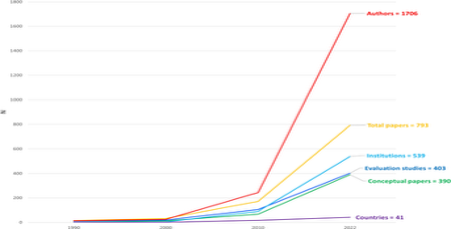
Triple P is an ideal example of how these successful programs can be founded on a basis of evidence, can maintain fidelity to data during the scaling and replication process, and can incorporate findings from its evidence base to better assist parents and families. Consider the growth of research into Triple P programs over time.

As the authors of a evaluation on the development and dissemination of Triple P said:

“Four decades of experimental clinical research have demonstrated that structured parenting programs based on social learning  models are among the most efficacious and cost-effective interventions available to promote the mental health and well-being of children, particularly children at risk of child maltreatment and developing social and emotional problems.”

Triple P is exactly that type of program, and the impact of the program has been positive in both communities throughout the U.S. and countries across the globe. As the authors of a comprehensive Triple P Evaluation noted:

“Various components of the Triple P system have been subjected to a series of controlled evaluations, and have consistently shown positive effects on observed and parent-reported child behavior problems, parenting practices, and parents’ adjustment across sites, investigators, family characteristics, cultures, and countries.

The substantial evidence base supporting Triple P to date includes 43 controlled trials addressing efficacy, effectiveness, and dissemination, as well as 22 service-based field evaluations.”

In 2017, these researchers engaged launched the U.S. Triple P System Population Trial, which tested the extent to which countries could implement the Triple P and see a reduction in child malnutrition. As the researchers noted, this 2017 study found that making Triple P universally available to parents in a country led to:

  • 13% fewer hospitalizations from child abuse injuries
  • 21% fewer out-of-home/foster care placements
  • 31% lower incidence of confirmed child abuse cases

This large-scale trial confirmed what other meta-analyses have found: Triple P has a positive effect on children’s behavior and adjustment, with more pronounced effects being seen in the toddler, pre-school, and elementary school periods.

Additionally, Triple P has been found to be cost effective, because better-equipped parents and healthier children result mean fewer engagements with the social safety net system.

Because of the positive impacts seen across the globe, the American Idea Foundation awarded a 2025 grant to the Running Rebels in Milwaukee, Wisconsin so they can bring the Triple P model to local parents and families who are in need.

Speaker Ryan has championed the example set by the Running Rebels’ Victor and Dawn Barnett and believes they can effectively introduce the concepts of the Triple P parenting program to Milwaukee families.

Funds from the American Idea Foundation will be utilized to train a cohort of Milwaukee-area parents with the Triple P model and then to collect evidence and research on the program’s impact. The hope is that not only will this effort contribute to the growing body of data around Triple P’s effectiveness but also assist Wisconsin families and children live happier and healthier lives.

To learn more about the American Idea Foundation’s 2025 grant recipients, click here. 

Filed Under: Blog, In The News

CUNY-ACE: Expanding Access to Higher Ed. & Boosting Graduation Rates

August 6, 2024 by Mike

BY: AIF Staff

In 2024, as part of its ongoing work to help organizations develop evidence-based approaches to fighting poverty and expanding economic opportunities, the American Idea Foundation provided financial support and technical expertise to 8 groups across the United States.

These organizations, all of whom operate on the frontlines of communities in-need, are led by policy entrepreneurs, problem-solvers, and innovators who are determined to solve some of our nation’s most challenging problems. Whether focusing on childhood literacy or helping veterans obtain careers in STEM-fields, each of the American Idea Foundation’s grant recipients are bright lights in our communities, helping people realize their full potential every, single day.

Even more impressive, these groups are putting data and evidence at the forefront of their approaches. They are undergoing rigorous evaluations to improve their methods and refine their programming so they can make an even more profound impact going forward. Speaker Ryan believes, as these organizations do, by using evidence to inform best practices and by scaling successful interventions, America will finally be successful in attacking the root causes of poverty.  

One example of an organization helping their community in an evidence-based way is ACE – CUNY (Accelerate, Complete & Engage – City University of New York)

Launched in 2007, CUNY’s Accelerated Study program provides students with access to higher education through New York City universities and assists them throughout their collegiate journey by providing a comprehensive suite of financial, academic, and personal services. The end goal of CUNY’s Accelerated programs is to ensure students facing systemic barriers to higher education complete an Associated program from the City University of New York system.

ACE-CUNY does this by providing financial services to full-time students in the form of tuition waivers, funding for textbooks, and transportation subsidies so they are able to enter college and stay on track to graduation. ACE-CUNY also provides a structured pathway through college via flexible class schedules and by providing students with qualified academic advisors who guide their progress. The program offers tutors, a community of peers to learn from, and career development opportunities for enrolled students.

The ACE-CUNY program was initially funded by Robin Hood as a pilot project at John Jay College of New York. An initial study conducted in 2015 using a randomized assignment of 900 students produced promising results as the first two cohorts of ACE-CUNY students saw an 18% boost in on-time, four-year graduation rates when compared to non-enrolled students. These initial findings allowed for the ACE-CUNY model to be scaled and it is now utilized at six other colleges within the New York system.

An early Cost-Benefit Analysis of ACE – CUNY was equally encouraging from an affordability standpoint. Researchers concluded that:  

  • For each dollar of investment in ASAP by taxpayers, the return was between three and four dollars….
  • When converted into overall benefits generated by the 1,000 enrollees, the considerably higher productivity of ASAP in producing associate degrees would provide fiscal benefits to the taxpayers of $46 million dollars beyond those of investing an approximately equal amount in the conventional degree program.  
  • Although the program costs per student were greater, the increase in the number of three-year graduates was so substantial that the cost per completed degree for ACE – CUNY students was about $6,500 less than for the comparison group.

A 2022 quasi-experimental study at John Jay College found the following:  

  • ACE students had higher retention rates than comparison group students each semester and the gap between the groups grew over time. Additionally, ACE students also enrolled in summer and winter classes at a higher rate than non-enrolled peers.
  • Participation in ACE had a large early effect on being on-track to on-time graduation. The experiment found ACE helped narrow gaps between Black and Hispanic students and White students in terms of on-time graduation rates.

A 2023 assessment by John Jay College also found the ACE program had a statistically significant positive impact on the likelihood of graduating with a bachelor’s degree within four years.

The study found participating ACE students had a 58.8% graduation rate compared with 46.4% in the control group, a nearly 12.5% difference. Further, the study found that demographic subgroups – specifically female students, Hispanic students, and Pell-grant eligible recipients — benefitted significantly after participating in the ACE program.

Conducted earlier this year, a CUNY assessment affirmed many previous research findings. Among them:

  • ACE students were estimated to graduate at a rate of 68.8%, higher than the control group rate of 57.1%, a difference of 11.7 percentage points.
  • ACE – CUNY students graduated within three years at more than double the rate of non-enrolled students.
  • ACE – CUNY students are more likely to earn a degree. Six years after beginning, 63.6% of enrolled first-time freshmen had earned either an associate or baccalaureate degree (or both) versus 43.3% of comparison group students.

In addition to Bottom Line, one of AIF’s 2023 grantees, ACE – CUNY is one of two models to produce sizable gains in the likelihood that students earn a bachelor’s degree. It does so by focusing on three specific areas: “integration and belonging, timely and relevant support, and academic momentum. Advocates of the CUNY-ACE program believe their wrap-around model works because it addresses the holistic needs of students rather than focusing on their isolated individual needs.”

Ultimately, it’s a win-win type program. As the Center for an Urban Future summarized, ACE-CUNY is “helping students save money by completing their degrees more quickly, maximizing the state’s investment in subsidized tuition by boosting completion rates, and strengthening New York’s economy by raising earnings and growing the tax base.”

Because of their success and because of the supporting evidence, Inside Higher Education noted that the ACE-CUNY  “system now has a team dedicated to helping other institutions, that are part of a network called ASAP|ACE National Replication Collaborative, and that are developing their own versions of these programs.” College administrators in California, Ohio, Tennessee, West Virginia, Pennsylvania, and North Carolina are all seeking to develop similar models to ACE-CUNY.

ACE-CUNY has a goal of serving 25,000 students annually and graduating 50% of these students within 3 years. It’s ambitious but based on the evidence, the program is well on its way to helping educate America’s future leaders and providing more economic opportunities by helping students earn a college degree.

To learn more about AIF’s 2024 grant recipients, click here. 

Filed Under: Blog, In The News Tagged With: Community Organizations Making a Difference

Safe Families for Children: A Community-Driven Effort to keep families intact

August 5, 2024 by Mike

By: AIF Staff

In 2018, former House Speaker and American Idea Foundation President Paul Ryan successfully fought for the passage of the Families First Prevention Services Act to be included as part of a bipartisan budget agreement. The legislation was one of the largest reforms of America’s child welfare programs in a generation.

Some of the legislation’s primary goals were to keep families intact by allowing states to receive federal support to keep children out of foster care settings, developing measures to preserve intact families, and to promote the use of evidence-based strategies in the child welfare space.

Before the legislation was passed,  states would have access to federal funds (Title IV-E) only after a child was placed in the foster care system and states were “prohibited from using any Title IV-E program funds to provide services, including “counseling or treatment” intended to “ameliorate or remedy personal problems, behaviors, or home conditions.”

Speaker Ryan believed that the federal government would be able to help more children and families, not to mention better utilize taxpayer dollars, by giving states the flexibility to receive federal assistance for children before they enter the foster care system not after. The legislation also expanded the use of substance abuse treatment services and created grants and federal funding mechanisms aimed at keeping families together.

These reforms have continued to see strong bipartisan support in Congress, in large part because of the number of children in America’s foster care system. According to the Casey Foundation, in 2021, 203,770 children entered the U.S. foster care system, with 30% of those children being aged 1 to 5. These children are our most vulnerable and community leaders and policymakers have a responsibility to find evidence-based solutions that help them.

In Speaker Ryan’s mind this responsibility takes two forms: 1) work to improve the lives of children in the foster care system and 2) work even harder to prevent children from entering the foster care system in the first place.

There have been numerous studies showing that children are often better off if they stay in their own homes and receive support there as opposed to entering the foster care system. In the hopes of strengthening and building a base of evidence to support this idea, the American Idea Foundation has supported groups like Friends of the Children and Safe Families for Children, which was selected as one of the American Idea Foundation’s 2024 grant recipients.

Founded in 2003, Safe Families for Children aims to be an alternative to foster care (when appropriate) by providing families in crisis with a caring, compassionate community capable of keeping their children safe and their family together. 

A faith-based organization, Safe Families for Children has three primary objectives:

1) Keep children safe during a family crisis like domestic violence, homelessness, or hospitalizations and prevent abuse and neglect,

2) Support families in crisis by providing a community support system, and

3) Reunite families and reduce the number of families entering the child welfare system.

Safe Families for Children is fueled by principles of radical hospitality, disruptive generosity, and intentional compassion. The organization uses these values to create networks of volunteers capable of supporting families and children in times of crisis. This illustration describes their wholistic, community-led approach.

Their goal is family preservation, and they work to combat the social isolation that many families face by providing community support structures. The impact is both immediate and transformative, as evidenced by Bethany’s story working with Safe Families for Children.

After 20 years and with 120 chapters across the United States, Safe Families for Children has amassed a strong track record of results. They have a network of 5,000 churches and 50,000 volunteers supporting their mission. They have a 98% reunification rate between parents and familiesand have arranged 70,000 hosting placements.This faith-based, community-focused model is having a transformative impact as they work to keep families intact and children cared for.

In part because of the Families First Prevention Services Act, more organizations working on child welfare issues are employing an evidence-based approach. Safe Families for Children is no different.

From 2016-2018, Safe Families for Children evaluated 99 families and their 216 children in Illinois over the course of a 2-year period. Among its notable findings were:

  • 78% of families that received support from Safe Families for Children were diverted from protective custody, compared with 47% of non-enrolled participants.
  • 89% of those working with Safe Families for Children kept their children in their homes one year after the hosting service concluded. This is compared with 65% of families not receiving their receives.

As policymakers work to improve our nation’s foster care system, they must also help prevent children from being separated from their families in the first place. This is where groups like Safe Families for Children play a crucial role. The organization is strengthening bonds in communities across the country by creating networks of support for parents and children in times of their greatest need. The American Idea Foundation is proud to team with legislators as they expand the use of evidence-based practices in the child welfare space and work with organizations like Safe Families for Children to ensure every child has a chance to thrive and prosper. To learn more about the American Idea Foundation’s 2024 grant recipients, click here. 

Filed Under: Blog, In The News Tagged With: Community Organizations Making a Difference

  • « Go to Previous Page
  • Page 1
  • Page 2
  • Page 3
  • Page 4
  • Page 5
  • Interim pages omitted …
  • Page 29
  • Go to Next Page »

Footer

  • Facebook
  • Twitter
  • Contribute
  • About
    • Paul Ryan
    • Our Team
  • Mission
    • 2025 Progress Report
  • Approach
  • News
    • Blog
    • Press
  • Contact
Copyright © 2023 American Idea Foundation. Inc. All rights reserved.